
Our history began in 1760
The Society was founded in 1760 by Bishop Johan Ernst Gunnerus, Rector Gerhard Schøning and Councillor of State Peter Friderich Suhm under the name Det Trondhiemske Selskab (the Trondhjem Society). This was more than fifty years before Norway had a university of its own.
Det Trondhiemske Selskab received royal approval of its statutes in 1767 and was then given the name The Royal Norwegian Society of Sciences and Letters (DKNVS). At the same time, it received its own seals. Since 1844, the reigning monarch has served as the Society’s patron.
His Majesty King Harald is the Patron of DKNVS.
Gunnerus, Schøning and Suhm were inspired by the ideas and ideals of their time. They supported the Enlightenment’s call for experience and reason to guide human thought and activity, and wanted to put their learning to use through research and public outreach.
Norway was rich in natural and human resources, but lacked the necessary institutions to lead the work of mapping what existed and finding out how it could be put to use.
Organising professional and social activities through associations or societies was very much of the time. Freemason lodges, dramatic, musical, literary and patriotic societies, and clubs sprang up in cities across Europe. In learned societies, particular emphasis was placed on empirical and exact knowledge of the natural world, often referred to as “the new sciences”.
DKNVS exists to advance and communicate science.
The Society was particularly active during its first fifty years, holding meetings and publishing works. During this period, the Society in Trondheim was the country’s only scientific institution. Natural history and archaeological collections were established, and a library was set up from the outset. Renowned scientists from Norway and abroad were elected as members. The Society’s activities later declined, but increased again from 1874, when new statutes were adopted. In 1902, the statutes were revised once more, and the requirements for scientific qualifications for membership were relaxed. In practice, the membership became a museum association, and the Society’s activities were largely directed towards the museum and library.
In 1926, the Society’s general assembly decided to reorganise its scientific activities. The Society’s statutes were revised to govern its general activities, with separate statutes for a scientific academy whose elected members held scientific qualifications, and for the scientific institution, the Museum, with its scientific collections and library. From 1926, therefore, the Society had two departments: the Academy, with its elected members and its own elected board, and the Museum, with its collections and library, managed by a directorate.
Following amendments to the statutes in 2002, the Academy and the Foundation have shared one board, while the two departments continue to operate as separate entities.
The Academy may have up to 435 scientific members, divided between the humanities and natural sciences classes. It may also have honorary and associate members.
The Royal Norwegian Society of Sciences and Letters’ Museum became part of the University of Trondheim in 1968. In 1984, the museum collections, buildings and library were transferred to the State. The Royal Norwegian Society of Sciences and Letters Foundation retained its endowments, funds and properties, which were managed by the Foundation’s directorate.
The founders of DKNVS
Overview of Presidents
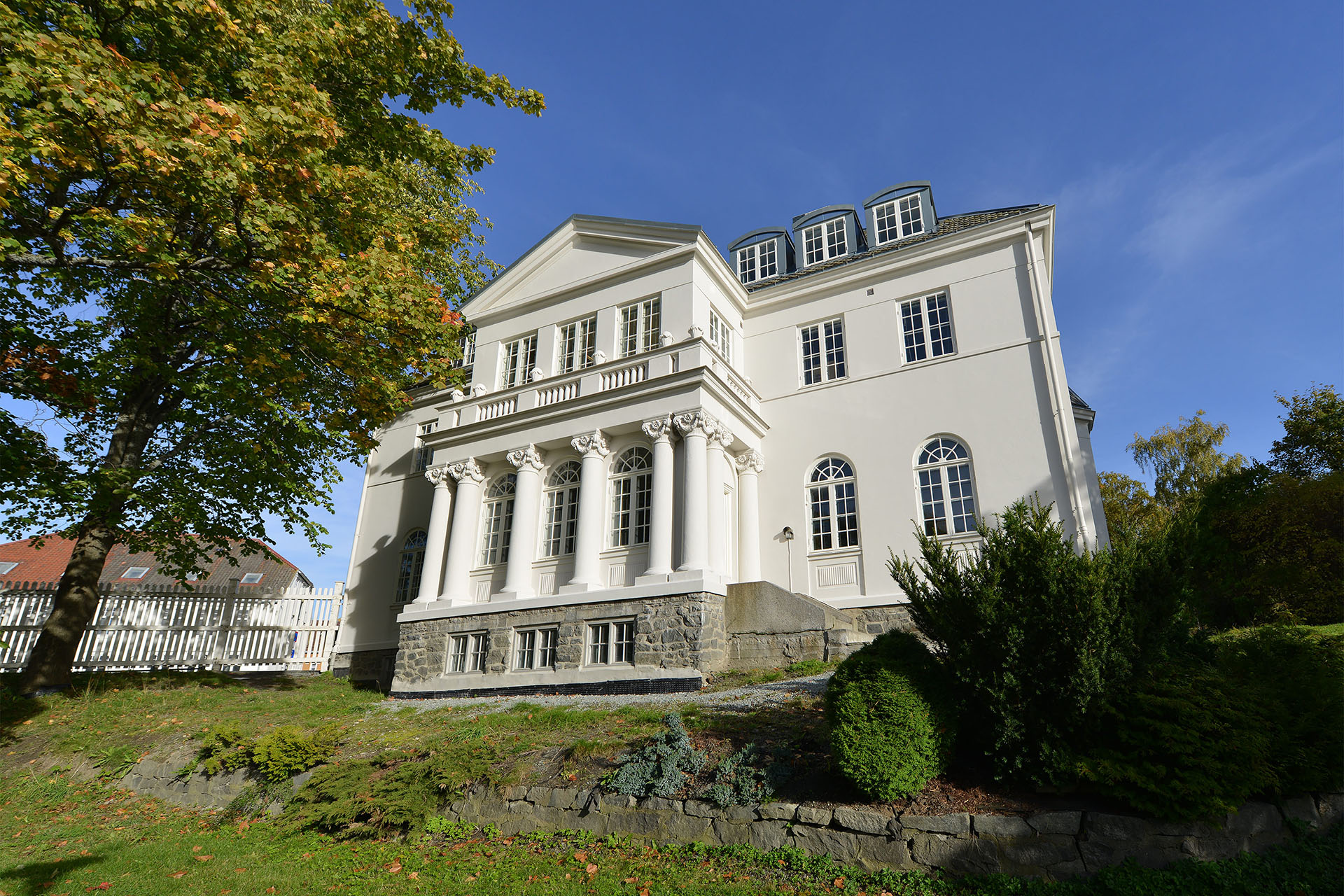
DKNVS is based in the former County Governor’s residence at Kalvskinnet.
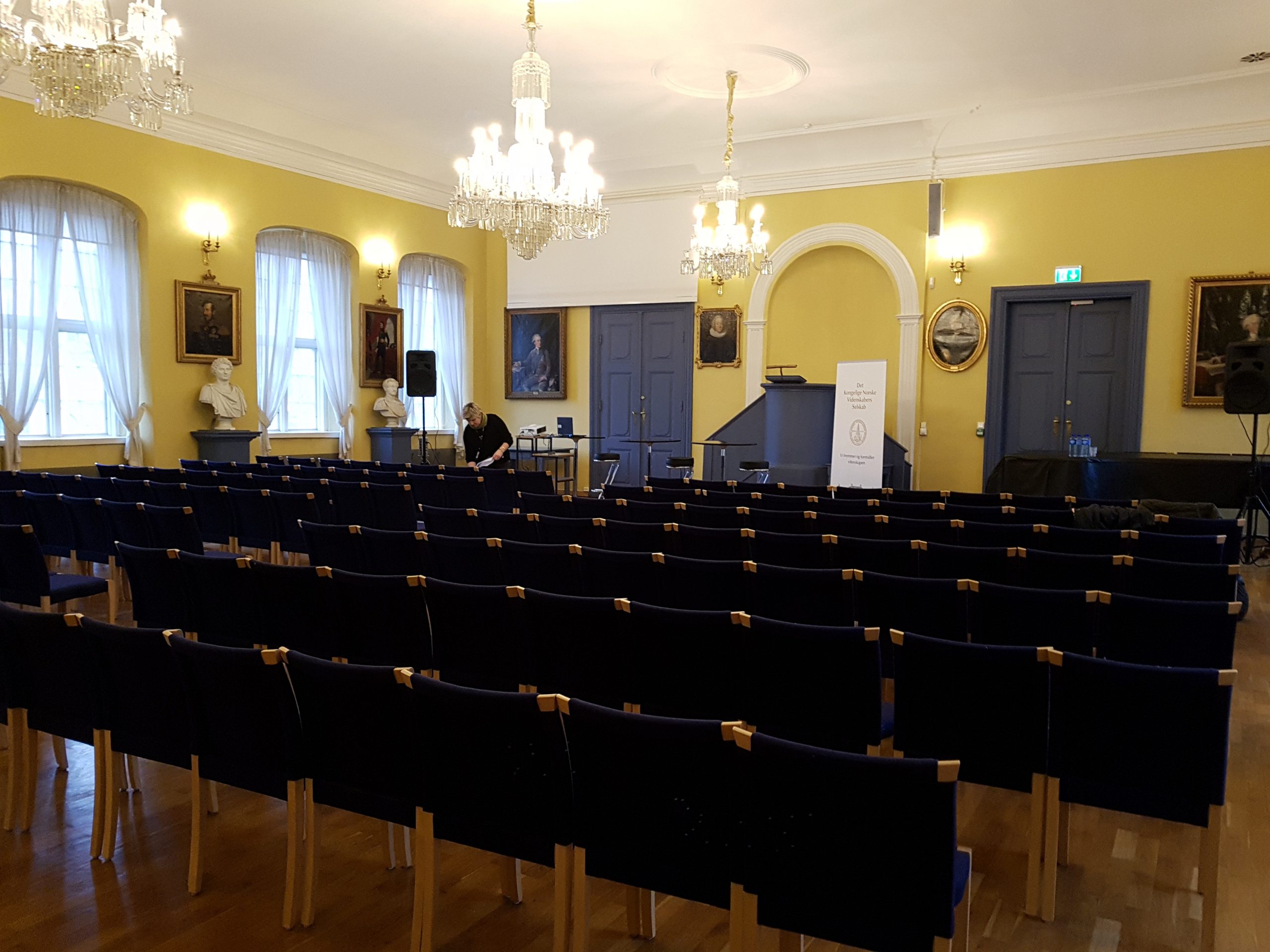
Many Academy meetings have been held in the old assembly hall of Trondheim Cathedral School.
Trondheim Cathedral School (Schola Cathedralis Nidrosiensis) can probably be dated back to 1080, making it Norway’s oldest school. The old assembly hall is on the second floor of the Harsdorff Building, completed in 1787. The Society had rooms here for its library and natural history collection, which remained there until 1866. The building was listed in 1983.