


Our history begins in 1760
The Society was founded in 1760 by Bishop Johan Ernst Gunnerus, headmaster Gerhard Schøning and Councillor of State Peter Friderich Suhm under the name Det Trondhiemske Selskab (the Trondheim Society). This was more than fifty years before Norway had its first university.
The statutes of the Trondheim Society received royal approval in 1767, when it was renamed Det Kongelige Norske Videnskabers Selskab (DKNVS), the Royal Norwegian Society of Sciences and Letters. The Society also received its own seals at that time. Since 1844, the reigning monarch has served as the Society’s patron.
Following the passing of His Majesty King Harald, our esteemed patron, DKNVS is seeking renewed royal patronage.
Gunnerus, Schøning and Suhm were inspired by the ideas and ideals of their time. They embraced the Enlightenment principle that experience and reason should guide human thought and action, and sought to use their knowledge to conduct research and share their findings.
Norway was rich in natural and human resources, but lacked the institutions needed to identify these resources and explore how they could be used.
Organising professional and social activities through associations and societies was characteristic of the period. Masonic lodges, theatrical, musical, reading and patriotic societies, and clubs emerged in cities across Europe. Learned societies focused particularly on empirical and precise knowledge of the natural world, often referred to as “the new sciences”.
DKNVS aims to advance research and share scientific knowledge
The Society was particularly active during its first fifty years, holding meetings and producing publications. During this period, the Society in Trondheim was Norway’s only scientific institution. Natural history and archaeological collections were established, along with a library from the outset. Distinguished scholars from Norway and abroad were elected as members. Activity later declined, but increased again from 1874 following the adoption of new statutes. In 1902, the Society’s statutes were revised once more, easing the academic qualifications required for membership. In practice, the membership became a museum association, and the Society’s activities largely centred on the museum and library.
In 1926, the Society’s General Assembly decided to reorganise its scientific activities. The statutes governing its general activities were revised, and separate statutes were adopted for a scientific academy whose members were elected on the basis of their academic qualifications, and for the Museum as a scientific institution with collections and a library. From 1926, the Society therefore had two divisions: the Academy, with its elected members and its own elected board, and the Museum, with its collections and library, managed by a board of directors.
Following amendments to the statutes in 2002, the Academy and the Foundation have shared a single board, although they remain separate entities.
The Academy may have up to 435 scholarly members, divided between the Humanities Class and the Natural Sciences Class. The Academy may also have honorary and associate members.
The Museum of the Royal Norwegian Society of Sciences and Letters became part of the University of Trondheim in 1968. The museum collections, buildings and library were transferred to the Norwegian state in 1984. What remained was the Foundation of the Royal Norwegian Society of Sciences and Letters, comprising endowments, funds and properties managed by the Foundation’s board of directors.
The founders of DKNVS
Presidents of DKNVS
Agreements with the Norwegian state, represented by NTNU
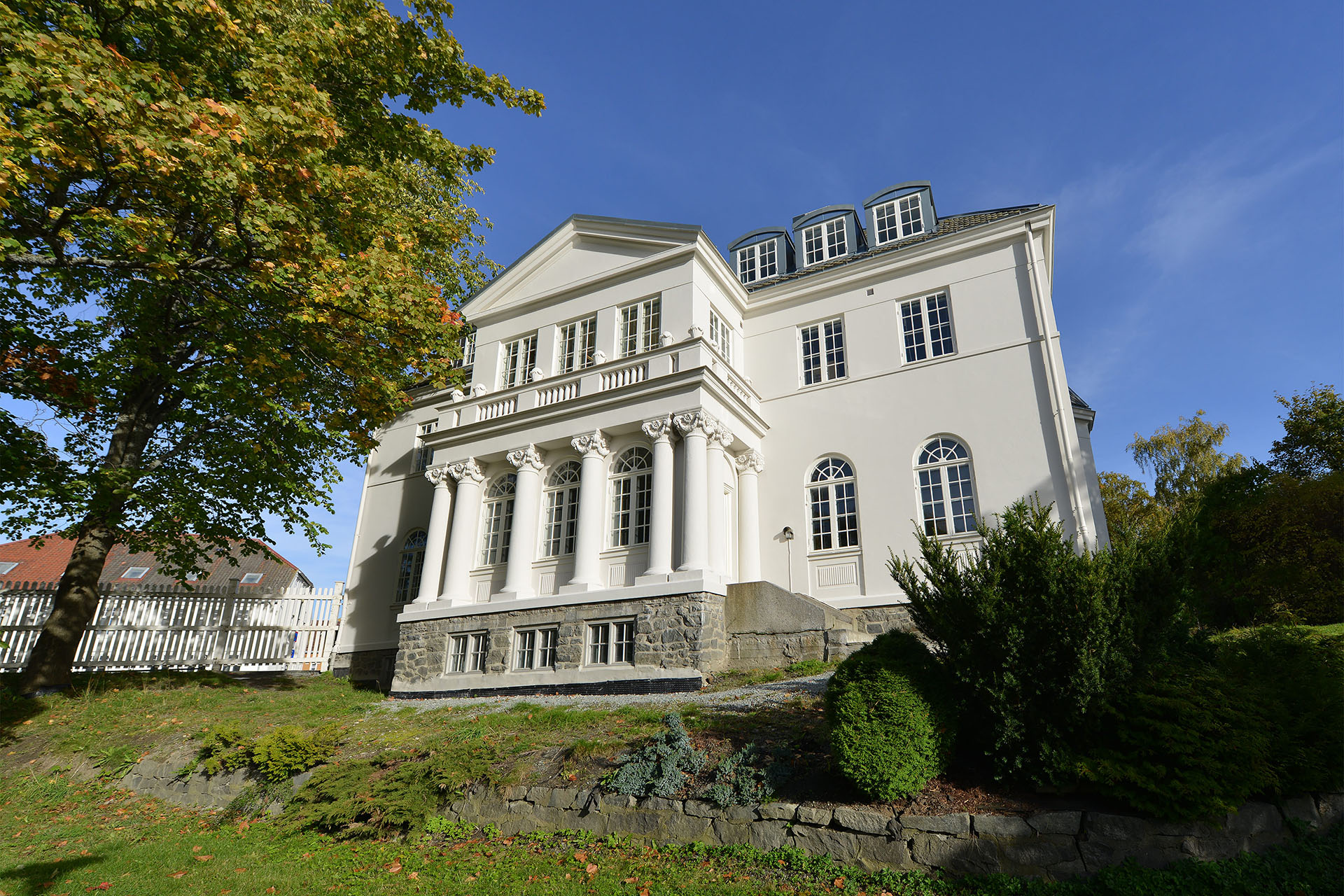
DKNVS is based in the former County Governor’s residence in Kalvskinnet.
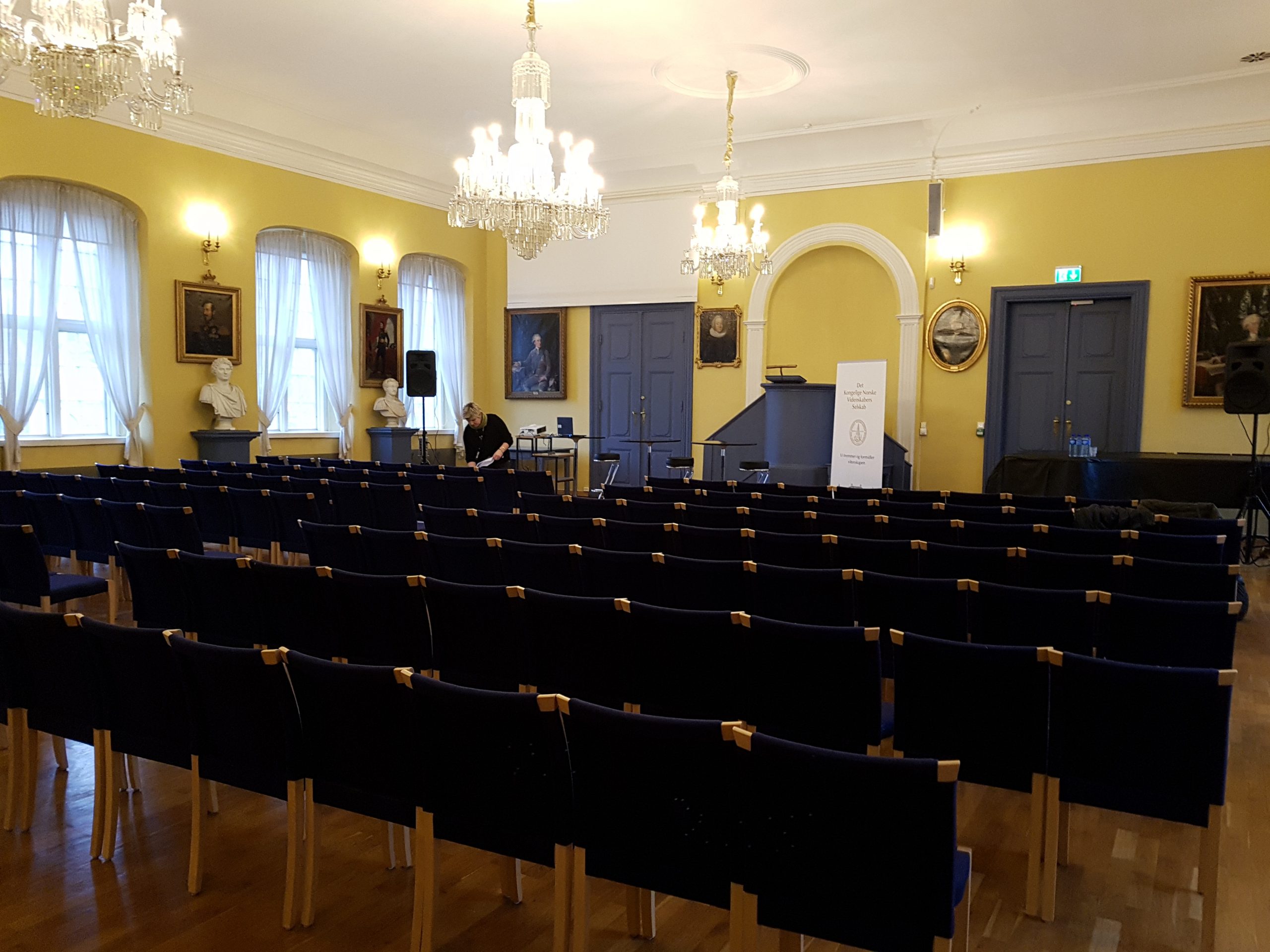
Many Academy meetings have been held in the historic assembly hall at Trondheim Cathedral School.
Trondheim Cathedral School (Schola Cathedralis Nidrosiensis) is believed to date back to 1080, making it Norway’s oldest school. The historic assembly hall is on the first floor of the Harsdorff Building, completed in 1787. The Society used rooms here to house its library and natural history collection, both of which remained there until 1866. The building was granted protected status in 1983.